'You can observe a lot of things from space.' 'Another thing is communication, in real time, especially in war-like situations.' 'During Operation Sindoor, we could play our part well.'

Military use apart, the new satellite would be useful for urban and rural applications, coastal land use and regulation, utility management and various related applications.

Aditya L1, the first space based Indian mission to study the Sun underwent the second earth-bound manoeuvre successfully, during the early hours on Tuesday, Indian Space Research Organisation (ISRO) said.

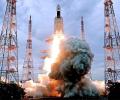
Heralding a new era, India on Friday night launched its heaviest commercial space mission ever with its polar rocket successfully putting five British satellites into the intended orbit after a flawless takeoff.
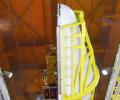
PSLV-C51/Amazonia-1 is the first dedicated commercial mission of NewSpace India Limited, Indian Space Research Organisation's commercial arm.

'Techfest', an annual science and technology event organised by the Indian Institute of Technology Bombay in Mumbai.

Aditya-L1 is the first Indian space-based observatory that will study the Sun from a halo orbit around the first Sun-Earth Lagrangian point (L1), which is located roughly 1.5 million km from the Earth.

Cartosat-3 satellite is a third-generation agile advanced satellite having high-resolution imaging capability.
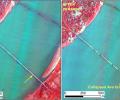
ISRO's Cartosat-3 satellite captured images of the damage caused by the 7.7 magnitude earthquake in Myanmar on March 28. The images show significant damage in Mandalay and Sagaing cities, including the complete collapse of the historic Ava (InnWa) Bridge near Inn Wa City. The earthquake also caused cracks and ground ruptures in the flood plains of the Irrawaddy River.
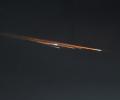
Experts speculated that they could be either meteorites entering the Earth's atmosphere or the pieces of rocket boosters which fall off after a satellite launch.
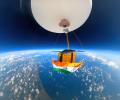
The payload sent into the upper reaches of the atmosphere were recovered after it splashed into the sea.
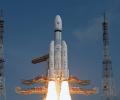
A mission to study the Sun, and launching a climate observation satellite, a test vehicle as part of Gaganyaan human space flight programme and an Indo-US synthetic aperture radar.

The ISRO on Sunday scripted yet another history after its LVM3 rocket successfully placed 36 satellites of United Kingdom-based OneWeb group company into intended orbits.

In Professor Sulochana Gadgil's passing, India has lost a scientific giant, a fierce intellect, and a compassionate soul, remembers Dr Madhavan Nair Rajeevan.

The Indian Space Research Organisation (ISRO) is set to welcome the new year with the launch of its first X-Ray Polarimeter Satellite that would offer insights into celestial objects like black holes, onboard a Polar Satellite Launch Vehicle rocket on Monday.

The agreement for cooperation in space technology was signed between Astrium and Antrix -- commercial arm of the ISRO -- entailes utilisation of the PSLV launch services. It enables Astrium to offer attractive solutions in international markets for in-orbit delivery of its earth observation satellites, using the PSLV launch services from Antrix/ISRO.
In a security breach, a woman posing as a senior scientist entered the Indian Space Research Organisation with a fake ID card and was in the premises for four hours before being arrested by the police.

The Trans-Lagrangian Point 1 Insertion manoeuvre marks the beginning of the spacecraft's about 110-day trajectory to the destination around the L1 Lagrange point, a balanced gravitational location between the Earth and the Sun.

The launch of Polar Satellite Launch Vehicle (PSLV-C52) is scheduled at 05:59 hours on Monday from the First Launch Pad of Satish Dhawan Space Centre, Sriharikota, the Bengaluru-headquartered space agency said.

PSLV C-29 blasted off from the Satish Dhawan Space Centre, about 110 km from Chennai, at 6 pm and released the six satellites one by one into a 550 km circular orbit.

'To access our satellite, you don't need any IQ test, you don't need to write an examination.' 'You can be a Class 1 student, an engineering student, a 60-year-old person, anybody can access our satellite.'

The Indian Space Research Organisation successfully launched India's fifth navigation satellite IRNSS-1E from Sriharikota.

Scientists are working on conducting various tests for the ambitious Gaganyaan mission and the agency is coordinating with the Navy and others in this connection, he said.

A Thai satellite has spotted hundreds of floating objects in southern Indian Ocean that could possibly be the debris of the crashed Malaysian plane, even as bad weather on Thursday grounded multination aerial search for the aircraft's wreckage.

'ISRO is resilient enough to spring back and come with a solution quickly.'

The Indian Space Research Organisation (ISRO) has rescheduled the launch of PSLV-C59 to Thursday due to an "anomaly" detected in the PROBA-3 spacecraft. The launch was originally scheduled for Wednesday at 4.08 pm from the spaceport in Sriharikota. The anomaly was identified by scientists at the European Space Agency (ESA), who requested the rescheduling of the launch. The PROBA-3 mission, a joint project between ESA and ISRO, aims to study the Sun's corona using two spacecraft that will fly in formation. The launch will provide valuable insights for ISRO's future solar missions, including the Aditya-L1 mission which was launched in September 2023.

India on Wednesday successfully launched a record 104 satellites -- all but three of them foreign--from Sriharikota and put them into orbit in a single mission onboard its most dependable Polar rocket.

ISRO needs next generation launchers and new facilities to manufacture and launch them.

Scientists expect to get new information about the past, present and future of the Sun after analysing the data that will be collected by India's first solar mission Aditya-L1, scheduled to be launched by Indian Space Research Organisation (ISRO) on September 2.

Research using NASA satellite images has revealed a concerning retreat of snow cover atop Mount Everest, indicating a lack of snow accumulation during the winter season of 2024-2025. This trend, observed through a 'rising snow line', suggests a warming climate and warmer, drier conditions prevailing in recent winters. Glaciologist Mauri Pelto attributes the snow cover loss to sublimation, where ice directly evaporates, contributing to the retreat of glaciers even above 6,000 meters on Mount Everest.
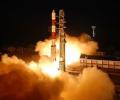
From relying on Russia for its first satellite launch, India is fast becoming a global hub to launch satellites, says T E Narasimhan

From a few rain gauges in 1875 to rivalling the world's best weather agencies, the India Meteorological Department (IMD) has weathered its way to becoming a global leader in forecasting.

The image clicked on July 6 clearly shows desert sand structures, river systems and complex cloud patterns.

The heaviest rocket of the Indian Space Research Organisation -- LVM3-M2/OneWeb India-1 -- blasted off from the Sriharikota spaceport on Sunday to place 36 broadband communication satellites into the Low Earth Orbit (LEO) for a UK-based customer.

The mission life of the 2,250kg GSAT-7A, built by ISRO, is eight years. It will provide communication capability to users in Ku-band over the Indian region.

As weather patterns grow more unpredictable due to climate crisis, India is taking a giant leap with "Mission Mausam" to improve weather understanding and forecasting through expanded observation networks, better modeling and advanced tools like AI and machine learning.
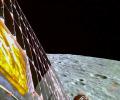
According to the Indian Situational Space Awareness Report for 2023, the nominal lift-off of the Launch Vehicle Mark-3, carrying the Chandrayaan-3 spacecraft, had to be delayed by four seconds based on the Collision on Launch Avoidance analysis.

NASA has released new global maps of Earth at night.

'The lesson Beijing would have learned is that there is, cost-benefit wise, no better option than to keep the Pakistan military supplied with its most advanced armaments, certain that in hostilities with India these would be used for maximum effect.'

The successful orbiting of the satellites by the Polar Satellite Launch Vehicle PSLV C-40 comes four months after the Indian space Research Organisation's mission to launch backup navigation spacecraft IRNSS-1H onboard PSLV-39 ended in a rare failure.
 © 2026 Rediff.com - Advertise with us - Disclaimer - Privacy Policy - Sitemap - Feedback - About us - Terms of use - Grievances